 (626) 286-0360
 Airsoft
 Fishing
 Air Gun
 TCG
TCG Events

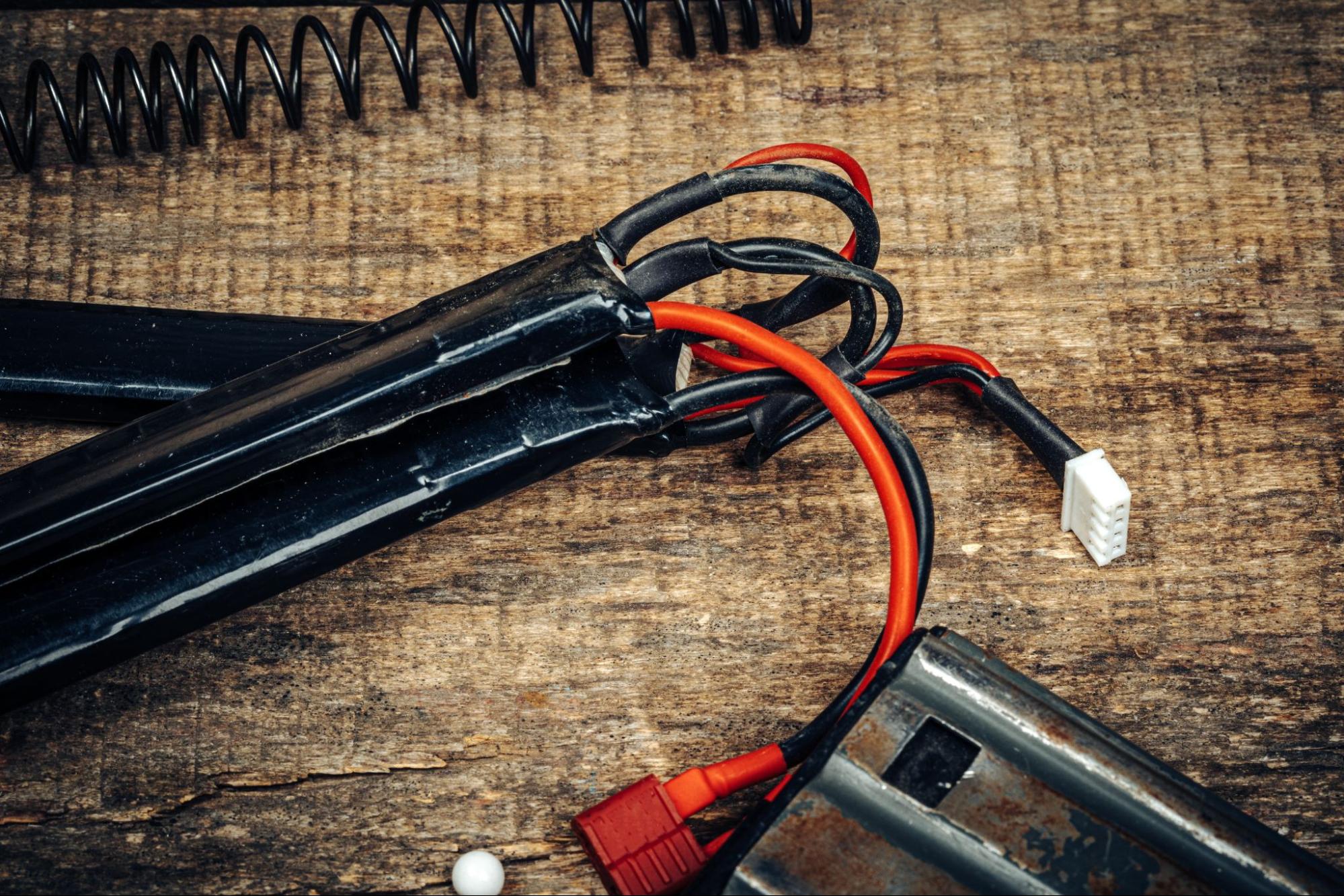
The best Airsoft battery matches your AEG's specs, fits your battery compartment, and delivers the performance you want safely. Get it right and your gun runs the way it's supposed to. Get it wrong and you're looking at sluggish trigger response, a fried gearbox, or a pack that simply won't fit. Here's how to make the right call for your setup.
Quick Answer
Most players do well with a 7.4V LiPo as a modern baseline or a 9.6V NiMH for a beginner-friendly option, sized to fit their stock and their typical playtime.
Player Type |
Recommended Starting Point |
Beginners |
7.4V LiPo (with balance charger) or 9.6V NiMH |
Performance Builds |
11.1V LiPo (MOSFET required) |
Longevity / Long Sessions |
Li-Ion (higher mAh, fewer charges) |
Best For Beginners
A 7.4V LiPo paired with a balance charger is the go-to starting point for most new players. It delivers noticeably better trigger response than a NiMH pack and fits the majority of modern AEGs. If you want something even more forgiving before committing to LiPo care routines, a 9.6V NiMH is a solid, simple option that's hard to misuse.
Best For Performance-Focused Builds
11.1V LiPo is the answer for performance-focused builds, but only if your gun has a MOSFET installed or is specifically built to handle that voltage. The performance jump is real: faster ROF, sharper trigger response, more aggressive cycling. Without the right electronics protecting your trigger contacts, that extra voltage will burn them out fast. Don't run 11.1V on a stock, unprotected AEG.
Best For Longevity And Big Capacity
Li-Ion packs are the move for players who prioritize long sessions and fewer charge cycles over peak performance. They typically offer higher mAh than LiPo at similar sizes and carry a longer overall service life. The trade-off is lower discharge rates, which makes them better suited to stock or lightly upgraded AEGs than high-demand performance builds.
Types Of Airsoft Batteries
The best chemistry for your setup depends on the performance you want, how much maintenance you're comfortable with, and how much safety headroom you need.
LiPo (Lithium Polymer)
LiPo is the most popular chemistry in the hobby right now. It delivers strong trigger response, high ROF, and a compact form factor relative to its output. The trade-off is that LiPo demands more attention: balance charging, proper storage voltage, and routine inspection before use. Treat it right and it performs great. Neglect it and it can swell, fail, or in worst-case scenarios, cause a fire.
LiPo comes in two common voltages for Airsoft. 7.4V (2S) is the modern sweet spot for most stock and mid-tier AEGs, delivering better trigger response than NiMH without stressing your internals. 11.1V (3S) delivers a significant performance jump but puts real stress on your AEG. Without a MOSFET protecting your trigger contacts, you'll burn them out fast. Many modern AEGs include a MOSFET from the factory; check your manual or the product specs to confirm. If yours doesn't have one, either add it or stick to 7.4V.
NiMH (Nickel-Metal Hydride)
NiMH is the traditional entry point, and it earns that role by being genuinely forgiving. It's much harder to misuse than LiPo, it doesn't swell if over-discharged, and many guns ship with a NiMH pack included. The downsides are bulk and weight. NiMH packs tend to be larger and heavier than LiPo at comparable voltages, and trigger response and ROF are typically softer.
The most common NiMH voltages are 8.4V (many guns ship with this) and 9.6V (a popular upgrade within the NiMH world). Physical size can be a limitation on Airsoft M4 platforms with tight buffer tubes, but AK-style Airsoft guns and crane stocks tend to accommodate NiMH packs well.
Li-Ion (Lithium-Ion)
Li-Ion sits in an interesting middle ground. It often offers higher capacity than LiPo at similar sizes, has a longer overall service life, and is generally considered safer in terms of failure modes. The trade-off is discharge rate. Li-Ion packs typically can't push power as quickly as LiPo, which makes them better suited to stock or lightly upgraded AEGs than high-demand performance builds. For players who prioritize long sessions and fewer charge cycles over peak output, Li-Ion is worth a look.
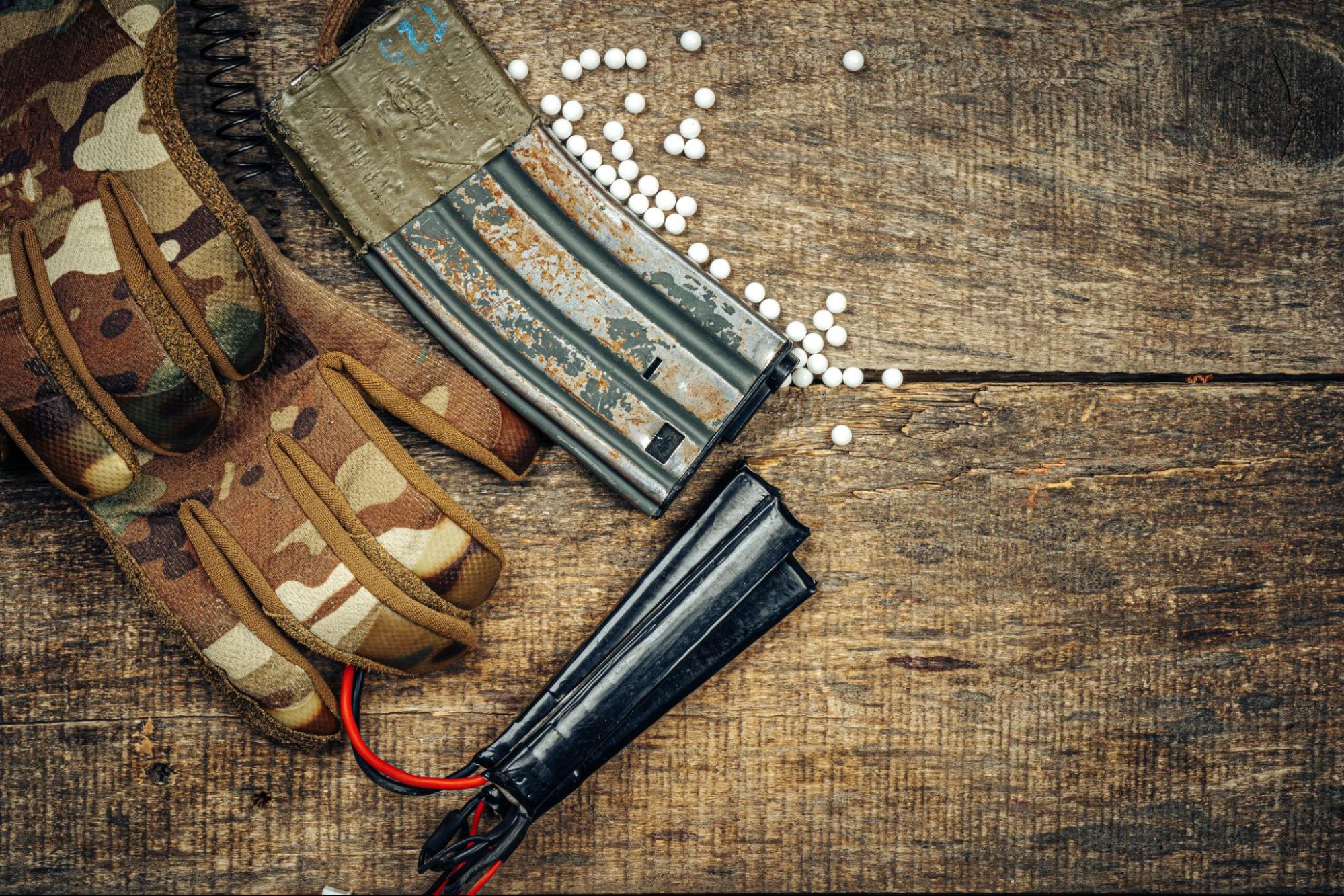
Capacity (mAh) And C-Rating
Capacity And Runtime
Milliamp-hours (mAh) tells you how much energy an Airsoft battery stores. Higher mAh generally means more trigger pulls before you need to swap or recharge. The catch is that higher mAh usually comes with a larger physical size.
For short skirmishes or casual play, 1,000 to 1,500 mAh is often plenty. For half-day or full-day events, look at 2,000 mAh and above. Keep in mind that a high-ROF build with a tuned motor eats through a pack much faster than a stock AEG, so budget for more capacity or bring extra packs if you've upgraded for performance.
C-Rating And Discharge Power
The C-rating on a LiPo battery tells you how quickly it can safely deliver its stored energy. A battery with too low a C-rating for your build will feel sluggish even when fully charged because the motor is demanding more current than the pack can safely supply.
Stock AEGs run comfortably on 15C to 20C packs. Upgraded builds with faster motors or higher ROF targets benefit from 25C and above. Most Li-Ion packs have lower C-ratings than performance LiPo packs, which is fine for stock builds but worth noting if you're considering Li-Ion for a demanding setup.
Physical Battery Form Factors
An Airsoft battery with perfect specs is useless if it doesn't fit your gun. Know your compartment before you buy.
- Stick batteries are long, narrow single-row packs that fit inside buffer tubes on M4-style guns and many AK-style platforms. They're one of the most common form factors in the hobby, though capacity is limited by the single-row layout.
- Nunchuck batteries split the cells into two parallel rows connected by a short cable, giving you more capacity in a shape that fits crane stocks and flexible battery compartments.
- Brick batteries are compact, dense packs designed for tight specialty compartments like PEQ boxes, PDW stocks, and some modern polymer handguard setups.
Before ordering any battery, measure your compartment's length, width, and height. Leave clearance for wiring, connectors, and whatever tolerance exists in your specific build.
Connectors And Compatibility
Your battery plug needs to match your gun, or you'll need an adapter or a rewire before you can use it.
- Mini Tamiya is the legacy standard and still ships on many guns and batteries. It's functional but not the most efficient connector at higher current draws.
- Deans (T-plug) has become a popular aftermarket standard because it provides better electrical contact and lower resistance, which translates to more efficient power delivery and less heat buildup. Many players rewire their AEGs to Deans as a basic upgrade.
- Other connectors like XT60 and EC3 show up occasionally, particularly on setups borrowed from the RC world.
If you're building or upgrading, it's worth standardizing on Deans across your batteries and charger leads from the start.
Airsoft Batteries At Evike.com
Shop Airsoft batteries by chemistry, voltage, capacity, and form factor so you can match your AEG, your stock space, and your playstyle. Pick up the right charger and safety essentials at the same time for consistent performance every time you hit the field. Find everything you need at Evike.com.